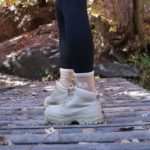
Tips for Staying Warm While Hiking

Going hiking in the cold is appealing for some because of the changing scenery in many regions. However, it also comes with its own unique set of challenges. Your primary concern becomes staying warm while you are outside, which requires you to take multiple preemptive measures to avoid injuries or sicknesses that the unforgiving conditions can cause. Following these tips for staying warm while hiking should keep you safe.

Bring Food and Hot Drinks

Food and drinks are essential supplies on any hike, but in the cold, they become even more important. The reason for this is that eating causes your body’s activity to heighten naturally as it works to digest the food. The byproduct of your metabolism is heat, which will then make you feel warmer. Carry food items that are easy to take out and consume on the go, as stopping for every snack or meal can also make you feel colder. Hot drinks in insulated bottles will also aid you in fending off the freezing air.

Layer Up Your Clothes

Layering usually comes into the discussion when talking about hiking. Again, this becomes highly critical when you’re concerned about finding tips for staying warm while hiking. You need to have an outer shell jacket and pants that will block wind and moisture. Underneath this, you should wear an insulating mid-layer that traps heat. Against your skin, go for moisture-wicking synthetic fabrics or wool. Wetness can come both from the outside and from your own body, and staying wet for a long time will make you feel especially uncomfortable when temperatures are low.

Protect Your Extremities

Don’t forget to protect your extremities as well. You want to stop frostbite before it has a chance to set in. Seek to cover up any exposed skin with additional gear that you wouldn’t normally have with you while hiking. To start with, you should put on a warm winter hat that covers the top of your head and ears. For the lower portion of your head and your neck, wear a neck gaiter. On your hands, it’s smart to layer insulating fleece gloves under shell gloves that block out moisture. Guarding your feet is a matter of combining thick wool or synthetic socks with waterproof boots. Make sure the extra sock thickness isn’t cutting off circulation to your feet, as this is dangerous in the cold, and bring back up socks just in case your primary ones get wet.

You can get military-grade boots that have rugged durability, high traction, comfort, and waterproof materials for your next cold-weather hike at ALTAI™. Don’t hesitate to call us today!

How To Dry Work Boots

While you’re working, you may get your boots soaked walking in the rain or stepping through puddles. When this happens, you need to find an efficient method to dry them completely so they’re ready the next day. Otherwise, your boots can cause general discomfort and blistering. They may also come to contain bacteria that could cause feet infections. We show you how to dry work boots with three different tried-and-true techniques you can easily do at home.

Drying With a Fan

Air circulation aids the drying process because it moves water particles away from the wet object. Since this is the case, placing your boots in front of a fan can get them back into a wearable state quickly. If you want to know how to dry boots fast, learn this technique. Before you begin, take off the laces and foam insole, which you can place in a clothes dryer safely. (You should also clean your boots to prevent mud from damaging them as they dry.)

With this done, put your boots on top of a towel, which will soak up any water drips. Bend wires—such as hanger wires—into “s” shapes. One end will hook into the fan’s exterior frame while the other will hold the boots by their openings. This position will allow the fan’s air to blow inside the boots. Leave this arrangement with the fan on its high setting overnight. Your boots should be good to go come morning.

Drying With a Towel

Drying with a towel is suitable for thinner boots, so if you want to know how to make work boots last longer, this information is for you. As with the fan method for how to dry waterlogged work boots, you should remove the laces and insoles and clean your boots before starting. Then, take dry towels and stuff them into your boots. With the remaining part of the towel hanging out of them, wrap your boots completely. Place your boots like this in front of a fan and be sure to check on them occasionally until you go to bed. If you notice the towels are soaked through at any point, replace them with fresh ones.

Drying With Newspaper

This technique is almost identical to the towel drying method but utilizes newspapers to dry boots instead and forgoes the fan. After taking off the laces and insoles and cleaning your boots, stuff them with newspapers. Subsequently, you should completely wrap them with newspapers. Wait a few hours and replace the newspapers when they become drenched. Although this is more involved and may take longer than the fan method, the advantage of using this approach is your boots will maintain their form better since they aren’t hanging from wires. Moreover, leather boots won’t be in danger of drying excessively to the point of cracking if you learn how to dry your work boots correctly.

If dealing with cleaning and drying is challenging or inconvenient for you, consider getting waterproof construction boots from ALTAI™. Our boots are waterproof and quick-drying and will repel dirt easily.

Tips for Choosing a Hiking Trail

Hiking is an activity that allows you to exercise while immersing yourself in remarkable natural landscapes. Much of your experience on each hiking trip that you take is determined by the particular trail you choose. With so many options frequently available across the country and even within the same location, however, you may not know how to best decide on which path to take. Take our tips for choosing a hiking trail as a trusty framework to work off of when you find yourself in this situation.

Consider Your Experience

Trails can vary widely in terms of difficulty, and attempting one that is too challenging can potentially make your excursion more painful than enjoyable. You want a good trail for you—not an overly intimidating trial that you aren’t prepared for. Given this, you should think about how experienced everyone in your group is. Don’t settle on a hike where you expect to meet steep inclines, narrow passages next to sheer drops, and areas that you can only proceed through by climbing if there is a person with you who is new to hiking. The same goes for yourself. It is smarter to slowly build up to harder trails than to tackle them immediately when you’re a novice.

Decide on Your Preferred Duration

The duration of a trail also factors into how you will feel as you walk along it. Of course, a lengthier trail will take more time and tire you out to a greater degree than a shorter one. You must also account for the presence of sloped ground, as this will slow you down as you trek upwards. Ask yourself how much time you want to put into your hiking and pick a trail accordingly. Also, you should remember that a longer hike will necessitate you to bring more supplies, such as food and water. You can find light paths that only take an hour and also more involved ones that you may spend the entire day on, so regardless of your preference, you should be able to find a suitable track to take.

Think About the Seasons

Seasons have to potential to deeply affect you while you are out. Thus, another tip for choosing a hiking trail is to think about the time of year, the climate at that trail, and the weather. The seasons will change how many layers you must wear to stay comfortable. In the cold, you may need a base, mid-, and outer layer, while when it is hot, you may just wear one. However, bright, warm days will mean that you must put on sunblock and cover up your extremities to avoid sunburn. If you are hiking during a rainy season, you must also pack a breathable rain jacket and wear waterproof boots.

No matter what kind of trails you choose, come to your hiking trips prepared by getting tactical performance boots from ALTAI™. Our hiking boots are comfortable, waterproof, resistant to abrasion, and provide you with ample traction in all conditions.

The Biggest Hiking Mistakes To Avoid Making

To the uninitiated, hiking might not seem like an intense physical activity, since it is not very fast-paced. This cannot be further from the truth, though. Trekking for several miles over rugged ground that is often on an incline takes a great deal of energy and a high level of fitness. Moreover, you must come prepared with the right supplies and gear to evade injury and exhaustion. Discover some of the biggest hiking mistakes to avoid making, so you aren’t caught off-guard when you venture out to your first trail.

Forgetting Food and Water

As stated, hiking will tire you out to a much greater degree than you may be used to if you spend most of your time sitting. This is why it is critical that you bring enough food and water to sustain you along the way. The quandary that you will run into, though, is finding a balance between carrying adequate fuel and fluids and keeping your pack light. The solution that hikers have found for this is to pack energy-dense foods, including nuts, dried fruits, jerky, granola bars, and sandwiches. These items won’t weight you down, but they’ll still provide you with enough nutrients and energy to keep you moving. You can’t get around the weight of water, but you should still bring a large bottle or two, so you don’t become dehydrated as you perspire.

Tackling Challenging Trails First

You might think that you’re ready to tackle a hard trail right away, but this is one of the biggest hiking mistakes to avoid making. Not only are you uncertain about how physically challenging hiking can be in general, but you also do not have a good idea about what kinds of situations you may face while on the trail. It is more prudent to gain a general feel for hiking through shorter, less taxing trails first. There, you can work out how much food and water you need relative to the difficulty of the hike, how much time it takes you to travel a certain distance, and what supplies you need that you didn’t think about before. Approaching hiking with care will help you prevent extreme fatigue and dangerous situations that you may not know how to respond to.

Wearing Unsuitable Clothing

Having the right clothing is imperative for hiking, but many newcomers to the activity may not realize this. As with the other mistakes we’ve mentioned, wearing unsuitable clothes can increase your risk of getting hurt. You should wear fabrics made of wool or synthetics, such as polyester, instead of typical cotton because these materials wick away moisture. Not only will you be more comfortable this way, but this will also help stop you from losing too much body heat in colder temperatures. For this same reason, you should pack a waterproof jacket to protect you if it starts to rain while you’re on the trail. As for your feet, you need hiking boots that provide good grip, comfort, and a hardy construction. They’ll support your ankles and keep you from slipping or otherwise injuring yourself while hiking.

Contact ALTAI™ today if you are interested in getting into hiking. We provide sturdy hiking, work, and uniform boots that work effectively in outdoor settings.

Qualities Every Work Boot Needs To Have

While you are on the jobsite, you need a solid pair of work boots to guard your feet against the hazards you come into contact with. What you wear on your feet is so important because a foot injury can put you out of commission for a long time. Without the ability to walk fully, most tasks become extremely difficult to carry out. Defend yourself against rough conditions and accidents by reading about the qualities every work boot needs to have.

Protective Height

There is a reason work footwear usually comes in the form of boots instead of shoes. The added height matters, as the extra material provides stability to your ankles and keeps out debris and other substances. When you are walking over uneven ground while carrying equipment or materials, the ankle support is invaluable in helping you to avoid sprains. Depending on your line of work, you may walk through areas where stones, sticks, water, or pieces of metal can get into shoes. With a boot that is around six to eight inches tall, you won’t find yourself in a situation where you experience pain or discomfort as a result of these items getting lodged in your footwear or moisture seeping in.

Strong Traction

The specific traction needs of different jobs vary based on the setting. If you work outdoors, you may need more aggressive outsoles to grip soft terrain. Some people, such as plumbers and carpenters, work mainly indoors on smooth, hard surfaces. For their environments, less chunky treads are acceptable. However, no matter what work you do, you must make sure your boots have strong enough traction to prevent you from slipping. The most well-armored boot in the world won’t do you much good if the soles are slippery. So pay attention to the soles when looking at boots.

A Good Fit

A good fit is subjective because the shapes of our feet are not all the same. While we can’t make recommendations on the exact dimensions of your boots, we can say that a proper fit is a quality every work boot needs to have. This means that when you lace up a pair, your feet should not shift around too much within the boots overall, and your heel should remain in place without slippage. The fit should be natural and comfortable, and you must have enough room in your boots to wiggle your toes. Try on boots before committing to them so that they don’t hinder you during work.

ALTAI™ provides rugged work boots that are waterproof, comfortable, and sturdy. View their specifications on our website and give us a call if you have any further inquiries.

Top Hiking Trails To Tackle This Fall

With the start of the autumn season, the landscape in many parts of the country is once again transforming as leaves change into rich red, orange, and yellow hues. You may want to witness this beauty firsthand and take advantage of the pleasantly cool temperatures that prevail during this time of the year. If so, hiking is the perfect activity to pursue. Although COVID-19 has restricted our travel, many trails have reopened with social distancing measures in place. Should you still feel unsafe, you can also plan for future autumn hiking trips as well. Here are a handful of the top hiking trails to tackle this fall or when things have returned more to a state of normalcy.

Sentinel Dome Trail (California)

Located within Yosemite National Park, the Sentinel Dome Trail lets you see miles of breathtaking rock formations and the valleys that lie between them. This is because the trail is high up in elevation, so the surrounding El Capitan, Yosemite Falls, Yosemite Valley, and High Sierra mountains are visible as you look around you. In terms of vegetation, you’ll get to witness a combination of fall-colored trees and evergreens. The tree for which the trail is best known, though, is the fallen Jeffrey pine, which is completely bare of any foliage at all.

The Appalachian Trail (Tennessee)

For a full-scale autumn experience, the Tennessee portion of the Appalachian Trail is a destination you’ll want to visit. There, the leaves become a striking red, with accompanying oranges and yellows as well. You’ll get fantastic views of the valleys and waterfalls in the area as you make your way around the Great Smoky Mountains amid this simultaneously fiery yet crisp atmosphere. Due to the large scale of the trail (the Appalachian Trail as a whole spans several states), many people enjoy taking multi-day hikes there and camping during the evenings.

Wildwood Trail (Oregon)

You may want to go to Wildwood Trail if you want a picturesque and less rigorous hike. The area is quite close to the city of Portland, and you’re welcome to bring your dog with you as long as you use a leash. Visitors have the option of hiking or running the trail because of its even pathways. A notable attraction you should make sure to see is the Stone House, an old rest station built back in 1929. The structure was damaged over time, and the city of Portland decided not to repair it. Today, the Stone House is an odd combination of moss-covered stone and graffiti that stands out among the trees.

As part of your preparations for these top hiking trails to tackle in the fall, you should gather the proper supplies. For hardy outdoor boots that will keep you dry and comfortable on the trails, visit ALTAI™ online today.

The Different Types of Hiking Boots

Filled with coarse and sometimes difficult terrain, hiking is an activity for which you need specialized footwear that will keep you comfortable and safe throughout the entirety of your treks. You have options regarding what to go for, as different footwear is designed for different levels of intensity within the broad spectrum of hiking. Read about the different types of hiking boots below to aid you in your decision about what to get for your hiking trips.

Hiking Shoes

While technically not true boots, hiking shoes share enough characteristics with the other hiking footwear to put them on this list. Unlike regular shoes or sneakers, hiking shoes have solid soles that are meant to protect your feet from jagged rocks and other hard objects that you may step on while hiking. Furthermore, hiking shoes are rugged enough to stand up to heavy use. Since they have less material, manufacturers can also make them lighter than full-fledged boots, which can make them more agreeable to you than the other options. Some versions are also waterproof. If you hike on lighter, easier trails, then these may be a good fit for you.

Day Hiking Boots

As the most common category when it comes to the different types of hiking boots, day hiking boots are great all-rounders. They give you ankle support with either mid- or high-cut shafts that are rigid enough to prevent you from spraining your ankles while stepping over uneven ground. Though their specific combination of features may differ between different models, you will often find that day hiking boots employ advanced technology to combine durability with a low weight that won’t tire you out. They also possess good traction to prevent slips on loose and wet areas and may be entirely waterproof as well.

Backpacking Boots

For serious hikers who go on trips that last several consecutive days, backpacking boots may be a worthy investment. They differentiate themselves from day hiking boots in that they are heavier, stiffer, and often more insulated. Though the added weight may seem like just a disadvantage at first, you quickly come to appreciate backpacking boots’ heft when you need to move with heavy loads. Carrying a lot of supplies can lead to rolled ankles if you are wearing other footwear. Backpacking boots ensure that you have a firm foundation and avoid this. With their insulation, full-grain leather uppers, and aggressive rubber treads, you can tackle cold and inclement weather, as well as off-trail terrain. The downside is that backpacking boots can tire you out faster than other boots and are not breathable.

ALTAI™ provides waterproof combat boots and outdoor boots that are appropriate for day hiking. They are hard-wearing, abrasion-resistant, waterproof, breathable, lightweight, and have strong traction. Contact us with any questions you have on our boots and see why they do so well in the outdoors by visiting our website.

ALTAI® Pro Tip: How To Clean Your Hiking Boots

How To Clean Hiking boots or shoes

By James Eastwood from Venchas.com

Your hiking gear requires a lot of care. This is one way of extending its lifespan, and it applies to your hiking boots. They require as much care and maintenance as any other shoe you own, if not more.

Why Hiking boots Require Cleaning?

Some people rarely wash their regular shoes. As such, they do not understand why their hiking boots need cleaning in the first place. You have two reasons that should compel you to keep your hiking boots clean at all times:

1). Hygiene

This goes without saying. Feet sweat. This happens every day. Because hiking is so strenuous, your feet tend to sweat more than normal. if you don’t clean your shoes, the accumulation of sweat on the inside will produce a terrible smell. If you refuse to wash the shoes even after noting the bad odor, you might eventually develop ailments like athlete’s foot.

2). Safety

This isn’t just a hygiene issue. Your hiking boots depend on the grooves on the bottom to provide the grip you need to traverse difficult terrain. Whenever you use them, the shoes gather dirt and debris in the grooves. if you allow that dirt to accumulate, it will eventually compromise the grip of your shoes, making you more likely to slip.

How to Clean Hiking boots?

When it comes to cleaning hiking boots, you have two options to choose from:

1). Hand Washing

Most people are encouraged to wash their hiking boots by hand. This is the safest option because you are less likely to ruin the material. Fortunately, the process is straightforward. All you need is a bucket, detergent (mild), a soft brush, and some water (lukewarm).

a). Use the bucket to collect some water. As was noted above, the water should be lukewarm. This temperature will make the washing process easier by loosening the dirt in the grooves. Coldwater isn’t as effective. Hot water will ruin the rubber components of the shoes.

The same goes for the harsh chemicals found in harsh detergents. They will also ruin the laces and the padding. Mild detergent is safer. Add a small amount to the bucket.

b). Get your brush and scrub the shoe. Because this is a soft brush, you can afford to scrub the entire body of the shoe. The sole is the most important because you have to ensure that you dislodge all the dirt.

Some shoes have stains on the exterior that require additional attention. Though, you shouldn’t scrub s0 thoroughly that you strip the material away.

If you keep struggling to clean the sole, dip it in the water from time to time to loosen the debris. Better yet, dip the entire shoe. You need the soapy water to eliminate all the dirt and germs inside and outside. hiking boots are tougher than regular shoes. They can survive submersion in soapy water.

c). Once you are satisfied with your work outside, turn your attention to the interior. Get a small brush. A toothbrush will do if you don’t have any superior options on hand. Scrub every surface you can reach. Pour some water inside and swish it around.

d). If you are satisfied with your work, rinse the shoe. You can use the same bucket. Replace the soapy water with clean water and submerge the shoes. Swish them around inside the bucket to eliminate as much dirt and soap as possible.

If the water is dirty and soapy, drain it, get more water, and submerge the shoes once more. Keep doing this until the water remains clear.

e). Once the shoes are clean, don’t be so quick to place them out in the sun. You have to shake all the excess water out. Some people wipe their shoes with a clean towel afterward to remove even more water. Then they place the shoes in direct sunlight. You must allow the shoes to dry completely before you wear them.

2). Machine Washing

Machine washing sounds dangerous, and it is. You should only use this method if your shoes are made from synthetic materials. Leather won’t survive.

The process is straightforward. You simply place the shoes in the washing machine. Then you run the wash cycle. Keep the machine on a gentle cycle. Additionally, you should use a mild detergent. Drying should be done by hand. Don’t use a dryer. It will ruin the shoe.

How to Keep Your Hiking boots Clean?

A lot of people fail to maintain the hygiene of their hiking boots because they simply hate washing shoes. This is an understandable attitude. Shoes are not easy to wash. And if they are really dirty, they can make a mess of things.

Fortunately, it isn’t always necessary to wash your hiking boots. Yes, you must clean them at some point. However, you can reduce the frequency with which you wash them by using the following methods to keep them clean:

1). Feet

Your feet are responsible for the sweat and dirt that typically accumulates inside a hiking shoe. Therefore, the easiest way to keep your shoes clean is to wash your feet. If your feet are clean and dry, the hiking boots will take longer to develop a bad order.

It is also important to wear socks. The fabric will insulate the shoes from your feet, protecting them from any bacteria your feet are carrying. Socks absorb moisture, so they will help with the sweat, keeping the interior of your shoes dry for longer periods and preventing fungal infections from taking root.

2). Storage

Don’t keep your shoes in dark, damp, tight locations. This will attract bacteria, especially if the shoes are already damp from your sweat. Store them in dry and open spaces.

3). Use

Don’t wear your shoes if you don’t have to. That is to say, people wear hiking boots when they are hiking. If you’re not hiking, take the shoes off. Let them air out to prevent the accumulation of moisture and the manifestation of bad smells.

4). Air Freshener

You can keep your shoes from smelling by spraying them with air freshener. Deodorizing powders are even more effective. But you should only use powders that won’t antagonize your skin.

Ultimately, you can’t avoid washing your hiking boots. The steps above can only stall the inevitable. And while it takes effort, the process of cleaning hiking boots is quite straightforward. If you know what you’re doing, it won’t take long.

While you’re here, why not check out this helpful article from our friends over at the Venchas camping blog, it really helped one of our staffers raise their mattress off the floor while they were moving houses so that they could enjoy an comfortable night sleep.

ALTAI® Pro Tip: How To Clean Your Hiking Boots

How To Clean Hiking boots or shoes

By James Eastwood from Venchas.com

Your hiking gear requires a lot of care. This is one way of extending its lifespan, and it applies to your hiking boots. They require as much care and maintenance as any other shoe you own, if not more.

Why Hiking boots Require Cleaning?

Some people rarely wash their regular shoes. As such, they do not understand why their hiking boots need cleaning in the first place. You have two reasons that should compel you to keep your hiking boots clean at all times:

1). Hygiene

This goes without saying. Feet sweat. This happens every day. Because hiking is so strenuous, your feet tend to sweat more than normal. if you don’t clean your shoes, the accumulation of sweat on the inside will produce a terrible smell. If you refuse to wash the shoes even after noting the bad odor, you might eventually develop ailments like athlete’s foot.

2). Safety

This isn’t just a hygiene issue. Your hiking boots depend on the grooves on the bottom to provide the grip you need to traverse difficult terrain. Whenever you use them, the shoes gather dirt and debris in the grooves. if you allow that dirt to accumulate, it will eventually compromise the grip of your shoes, making you more likely to slip.

How to Clean Hiking boots?

When it comes to cleaning hiking boots, you have two options to choose from:

1). Hand Washing

Most people are encouraged to wash their hiking boots by hand. This is the safest option because you are less likely to ruin the material. Fortunately, the process is straightforward. All you need is a bucket, detergent (mild), a soft brush, and some water (lukewarm).

a). Use the bucket to collect some water. As was noted above, the water should be lukewarm. This temperature will make the washing process easier by loosening the dirt in the grooves. Coldwater isn’t as effective. Hot water will ruin the rubber components of the shoes.

The same goes for the harsh chemicals found in harsh detergents. They will also ruin the laces and the padding. Mild detergent is safer. Add a small amount to the bucket.

b). Get your brush and scrub the shoe. Because this is a soft brush, you can afford to scrub the entire body of the shoe. The sole is the most important because you have to ensure that you dislodge all the dirt.

Some shoes have stains on the exterior that require additional attention. Though, you shouldn’t scrub s0 thoroughly that you strip the material away.

If you keep struggling to clean the sole, dip it in the water from time to time to loosen the debris. Better yet, dip the entire shoe. You need the soapy water to eliminate all the dirt and germs inside and outside. hiking boots are tougher than regular shoes. They can survive submersion in soapy water.

c). Once you are satisfied with your work outside, turn your attention to the interior. Get a small brush. A toothbrush will do if you don’t have any superior options on hand. Scrub every surface you can reach. Pour some water inside and swish it around.

d). If you are satisfied with your work, rinse the shoe. You can use the same bucket. Replace the soapy water with clean water and submerge the shoes. Swish them around inside the bucket to eliminate as much dirt and soap as possible.

If the water is dirty and soapy, drain it, get more water, and submerge the shoes once more. Keep doing this until the water remains clear.

e). Once the shoes are clean, don’t be so quick to place them out in the sun. You have to shake all the excess water out. Some people wipe their shoes with a clean towel afterward to remove even more water. Then they place the shoes in direct sunlight. You must allow the shoes to dry completely before you wear them.

2). Machine Washing

Machine washing sounds dangerous, and it is. You should only use this method if your shoes are made from synthetic materials. Leather won’t survive.

The process is straightforward. You simply place the shoes in the washing machine. Then you run the wash cycle. Keep the machine on a gentle cycle. Additionally, you should use a mild detergent. Drying should be done by hand. Don’t use a dryer. It will ruin the shoe.

How to Keep Your Hiking boots Clean?

A lot of people fail to maintain the hygiene of their hiking boots because they simply hate washing shoes. This is an understandable attitude. Shoes are not easy to wash. And if they are really dirty, they can make a mess of things.

Fortunately, it isn’t always necessary to wash your hiking boots. Yes, you must clean them at some point. However, you can reduce the frequency with which you wash them by using the following methods to keep them clean:

1). Feet

Your feet are responsible for the sweat and dirt that typically accumulates inside a hiking shoe. Therefore, the easiest way to keep your shoes clean is to wash your feet. If your feet are clean and dry, the hiking boots will take longer to develop a bad order.

It is also important to wear socks. The fabric will insulate the shoes from your feet, protecting them from any bacteria your feet are carrying. Socks absorb moisture, so they will help with the sweat, keeping the interior of your shoes dry for longer periods and preventing fungal infections from taking root.

2). Storage

Don’t keep your shoes in dark, damp, tight locations. This will attract bacteria, especially if the shoes are already damp from your sweat. Store them in dry and open spaces.

3). Use

Don’t wear your shoes if you don’t have to. That is to say, people wear hiking boots when they are hiking. If you’re not hiking, take the shoes off. Let them air out to prevent the accumulation of moisture and the manifestation of bad smells.

4). Air Freshener

You can keep your shoes from smelling by spraying them with air freshener. Deodorizing powders are even more effective. But you should only use powders that won’t antagonize your skin.

Ultimately, you can’t avoid washing your hiking boots. The steps above can only stall the inevitable. And while it takes effort, the process of cleaning hiking boots is quite straightforward. If you know what you’re doing, it won’t take long.

While you’re here, why not check out this helpful article from our friends over at the Venchas camping blog, it really helped one of our staffers raise their mattress off the floor while they were moving houses so that they could enjoy an comfortable night sleep.

The Dos and Don’ts of Breaking in Your Work Boots

Work boots are the foundation you rely on to complete your job safely and successfully each day. Depending on your work conditions, they should give you ankle support, strong traction, and protection from things such as falling objects, water, and extreme temperatures. As a result, they are built tough and include features that regular footwear lacks. Still, all this comes to naught if they are uncomfortable. These are some of the dos and don’ts of breaking in your work boots. Use this information to ensure you don’t wind up with foot pain when you purchase your next pair.

Do Try Out the Fit

Getting new boots is easier than ever. With a great number of options available to you both online and in stores, you can find boots that fit your criteria and look nice as well. Ultimately though, you cannot be sure whether a boot is a good match for you until you try it on. When you visit a store in-person, it’s easy to try things on. But if you buy through the web, it may be more difficult. Make sure the company or supplier you choose allows you to return and exchange boots for different sizes, so you have the leeway to try out the fit. From there, it’s a matter of feeling how tight or loose the boots are and picking the model and size that’s best for you.

Don’t Disregard Uncomfortable Spots

After a brief walk with new boots, you might notice some spots of discomfort. Perhaps you feel a pinch in a particular area or a hot spot that rubs your foot the wrong way. Don’t buy the boots thinking these uncomfortable spots will fade over time. If the fit is incorrect in the beginning, you will only feel it more and more as time goes on. Eventually, your feet may be in so much pain that you can’t concentrate at work, and you will be forced to buy another pair prematurely.

Do Put Them on at Home First

Because work boots are built to be tough, they are often not the softest footwear at first. If you have the correct fit, however, they will conform to your feet as you use them. It’s therefore a good idea to walk around your home with brand-new work boots for a few days or weeks before you take them with you to work. This gives you time to break them in a bit and allows you the freedom to take your boots off if they start to hurt. When you finally put them on for your workday, they’ll be less likely to give you problems from being too rigid.

Don’t Use Shortcuts

There are some shortcut methods that people use to break in work boots faster. You should steer clear of these, as they can end up doing more damage than good. Examples of these kinds of tips often involve softening up or stretching the leather in boots. Some say you should use a hairdryer to heat up the leather, but this may end up drying and cracking your boots. On the opposite end of the spectrum, some people recommend putting your boots in water to loosen them. In reality, soaking your boots for prolonged periods could just result in deformation.

For work boots and lightweight duty boots that rise to the challenge of labor and harsh environments, call ALTAI™ today.

Cart0
There are no products in the cart!
Continue shopping